
Marketing Secrets for passionate business owners
Introduction
Kat was exceptional at what she did.
Eight years as an accredited nutritionist. A numerous number of clients who had transformed their health in ways they'd stopped believing was possible. Referrals coming in consistently - not because of a referral program she’d put in place, but because the results she helped her clients achieve - made her clients want to share with their friends.
She was confident in her work. She believed in it completely. And she had built something real.
The problem was, almost nobody outside her existing clients knew she existed.
When Kat decided to grow her practice, she did what most small business owners do. She looked at what the big wellness brands were doing. She created Facebook Meta ads. She paid an agency to manage her social media. She posted the polished flat-lay photography, the colour-coded meal plans, the motivational quotes over stock images of avocado toast. She had a content calendar that looked impressive in a spreadsheet.
None of it worked. Not really.
Six months later, her follower count had crept up by a few hundred. Her enquiry rate had barely moved. She was spending $800 a month on an agency that was producing content that felt nothing like her - and attracting nobody who felt like her clients.
She thought to herself “I feel like a fraud.” Not because her work wasn't real, but because her marketing wasn't. She was performing marketing rather than doing it. And somewhere in the gap between those two things, the best version of what she had to offer was getting completely lost.
Here's the thing nobody tells you when you start a small business: marketing was never designed for you. The frameworks, the playbooks, the "best practices", they were built for brands with six-figure budgets, dedicated creative teams, and the kind of distribution that turns repetition into awareness. When a small business tries to play that game, it's competing with one hand tied behind its back and borrowing a strategy that was never meant to fit.
But when you genuinely believe in what you do, when the thing you're selling is something you'd stake your reputation on, marketing becomes something entirely different. It stops being a performance. It starts becoming a conversation. And that conversation, when it's honest and specific and built on real belief, is the most powerful growth engine available to any small business.
This article is for Kat. And for the thousands of people like her. Coaches, personal trainers, physios, practitioners & the small business owners who are brilliant at what they do, deeply committed to the people they serve, and exhausted by marketing that doesn't feel like them.
Here's what actually works.
Chapter 1: Why Most Small Business Marketing Doesn't Work
The most common marketing mistake small business owners make isn't spending too little.
It's copying the wrong people.
The spray-and-pray approach. Posting without strategy, boosting without targeting, producing content because the algorithm demands it, is the default setting for most small businesses. It's not laziness. It's a lack of direction. They've been taught to look at the biggest players in their space and reverse-engineer what they're doing. And the biggest players are doing something that only makes sense at scale.
Mass marketing is built on repetition and reach. The theory is simple: show your message to enough people enough times, and eventually some of them buy. It works, when you have the budget to reach millions. When you're a small business, you don't have that budget. What you have instead is something worth far more: a real story, a specific point of view, and a client who chose you because you're not interchangeable with anyone else.
Nielsen research tells us that 92% of consumers trust recommendations from people they know over any form of brand advertising. Let that land for a second. Nine out of ten of your ideal clients will trust a personal recommendation over anything you could ever produce at scale. And yet most small businesses spend the majority of their marketing budget trying to manufacture the kind of reach that advertising promises, while neglecting the mechanisms that generate the kind of trust that actually converts.
HubSpot's data adds another layer: businesses that blog consistently generate 67% more leads than those that don't. Not because blogging is magic, but because consistent, specific, useful content builds the kind of authority that earns trust over time.
And there's one more constraint that applies to every piece of marketing you'll ever create. Microsoft's attention span research found that you have eight seconds to earn someone's attention before they move on. Eight seconds. That means your first sentence, your first image, your opening hook, all of it needs to do one job above everything else: make the right person feel immediately understood.
Kat's agency content wasn't doing that. It was pretty. It was professional. And it was entirely forgettable.
The businesses winning at marketing right now aren't the ones with the biggest budgets. They're the ones with the clearest story.
Chapter 2: Your Story Is Your Strategy
The most underutilised marketing asset in any small business isn't a platform or a tool or a campaign.
It's the founder's story.
Donald Miller's StoryBrand framework makes one thing clear: your brain is wired for narrative, not information. When someone tries to sell you something, your guard goes up. When someone tells you a story, a real one, with tension and stakes, a hero, a villain, overcoming challenges and a genuine transformation, your brain leans in. The guard comes down. The connection begins.
The mistake most business owners make in their marketing is positioning themselves as the hero of their own story. They lead with their credentials, their awards, their years of experience. What Miller argues and what the research consistently supports, is that the customer needs to be the hero. Your job is to be the guide. Not the main character.
When Kat rebuilt her marketing, she stopped leading with her qualifications. She started leading with the problems her clients showed up with, the exhaustion, the inflammation, the frustration of trying everything and still not feeling well. She described the journey her clients went on. She talked about what life looked like on the other side. Her qualifications became the reason the reader could trust her to be the guide. Not the main event.
Harvard Business School research found that emotionally connected customers are 52% more valuable over their lifetime than those who are merely highly satisfied. That emotional connection doesn't come from a polished ad. It comes from a story that makes someone feel seen.
Simon Sinek's Golden Circle framework pushes this even further. Most businesses communicate from the outside in, here's what we do, here's how we do it. The businesses that build real loyalty communicate from the inside out: here's why we exist, here's what we believe, here's what's at stake if you don't make this change. The 'why' is always more powerful than the 'what.'
Your origin story as the founder, why you started, who you started it for, and what you believe about the people you serve, is the foundation of every single piece of content you should ever create.
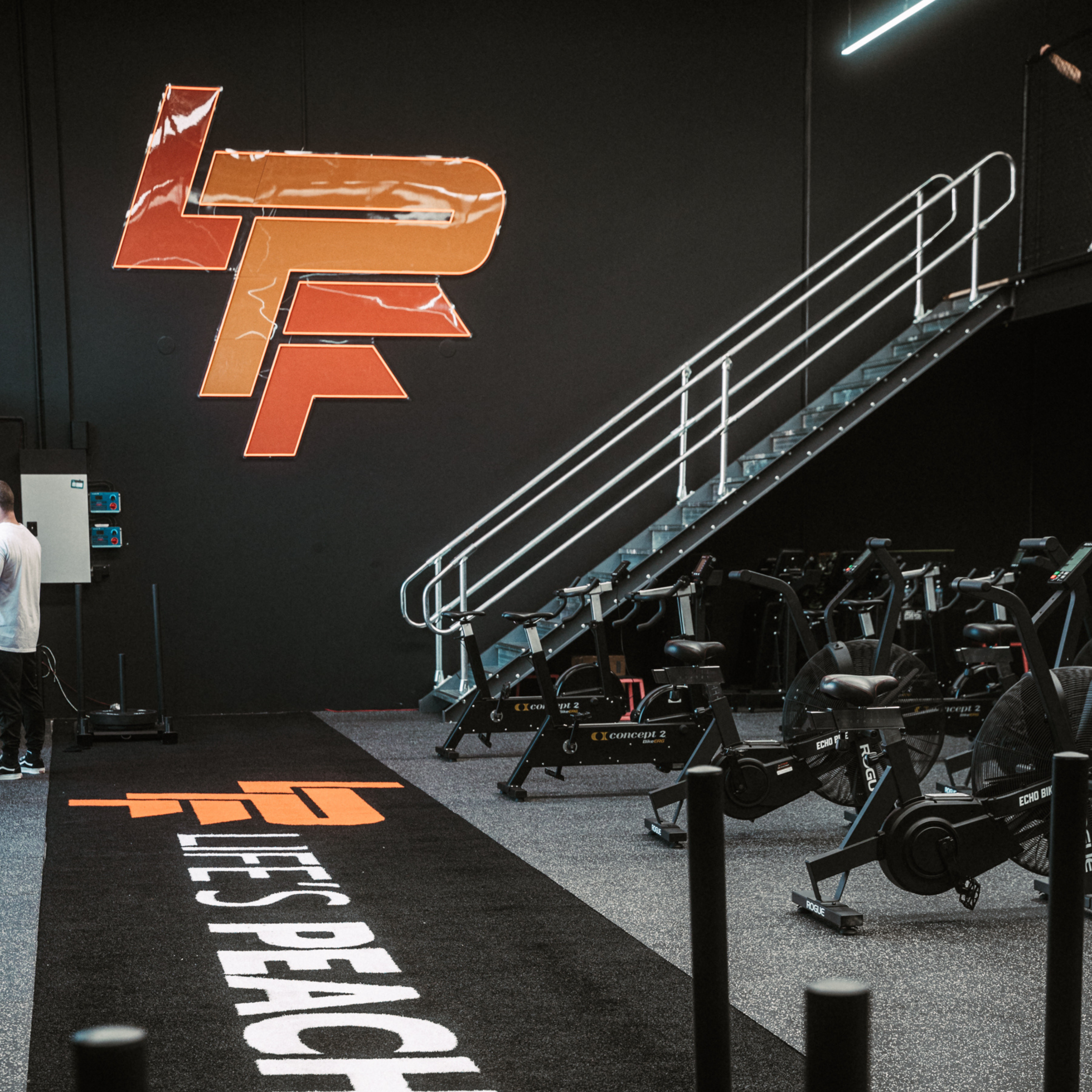
Life’s Peachy constantly tells our origin story. I was 14 years old when my best friend & role model died in a car accident. His name was Cory Peach. Not long after Cory’s passing, the community created the mantra ‘Life’s Peachy’ in remembrance & honour of Cory. Reminding me everyday the impact Cory had on my own life, and my daily obligation to give value to members of the community - just like Cory during his short, well-lived 19 years on Earth.
Kat also had an incredible origin story. Her own health had collapsed in her late twenties. A diagnosis that terrified her. A medical system that gave her drugs but no real answers. An 18-month journey back to herself, built almost entirely through nutritional intervention. That story was sitting completely unused in all of her marketing. Her agency never asked for it.
When she started telling it, everything changed.
Chapter 3: Content That Attracts vs. Content That Performs
There is a version of content marketing that gets likes. And there is a version that gets clients. They are not the same thing, and they are not built the same way.
Content that performs, in the algorithmic sense, is engineered for engagement. Trending audio, provocative takes, relatable memes. It has its place. But for a service-based small business trying to attract the right clients, content that attracts is built on a completely different principle: give your best knowledge away for free, and trust that the person who values it will want more.
The Content Marketing Institute's research is unambiguous on this: content marketing costs 62% less than traditional advertising and generates three times as many leads. The caveat is that it requires patience. Content that builds trust does so over time, not overnight. It's a long game played by people who believe deeply enough in what they do to teach it publicly.
The three content modes worth mastering are education, entertainment, and inspiration. The real challenge is knowing when to deploy each one.
Education is the foundation. If you know something genuinely useful to your ideal client, teach it. Kat started writing detailed posts about inflammation, about the gut-brain connection, about why calorie restriction alone fails most people. She was giving away the thinking that underpinned her practice. The response was immediate. Comments from people who'd never heard of her. DMs from people asking how to book. Because free, specific, expert content signals one thing above everything else: this person actually knows what they're talking about.
Entertainment holds attention. A story, a moment of honesty, a behind-the-scenes glimpse at the real experience of running a practice, this is what makes someone come back. It's the difference between a page people follow and a page people look forward to.
Inspiration is the bridge between education and action. Not motivational quotes, but real evidence that the thing you're offering is worth believing in. A client who came to Kat in tears at her first appointment and ran a 10km eight months later. That kind of story doesn't just inspire, it converts. It inspires the audience & makes them think they can do it too.
Gary Vaynerchuk's framework from Jab, Jab, Jab, Right Hook applies directly here: give value repeatedly before you ever ask for anything. When Kat finally started promoting her one-on-one program in her content, she had an audience that already trusted her. The response was nothing like the six months before it.
And on social proof: 88% of consumers trust online reviews as much as personal recommendations. Testimonials aren't vanity. They're evidence. Every client result you share is a piece of marketing working for you around the clock.
Kat started gaining momentum. It wasn’t long until overwhelm started to creep in. She assumed she had to be posting content on ALL available platforms.
Chapter 4: The Platforms That Actually Matter for Your Business
Here is the most time-saving marketing decision you will ever make: choose two platforms and go deep, rather than five platforms and go shallow.
The obsession with being everywhere is one of the most common and most costly mistakes in small business marketing. It leads to mediocre content on multiple platforms, a fractured content strategy, and the slow exhaustion of a founder trying to maintain a presence they don't have the bandwidth to sustain. Sprout Social's research confirms what most experienced marketers already know: businesses active on one to two platforms outperform those spread across four or more in both engagement rate and conversion.
The platforms that matter for your business are not the platforms that are popular. They are the platforms where your specific client actually lives, and where the content format you produce best performs.
For Kat, that was Instagram and email. Her ideal clients, women between 35 and 55 navigating chronic health issues, were on Instagram. They used it actively. They saved posts. They shared content with friends in the same situation. And they responded to long-form educational content in a way that made Instagram carousels one of her highest-converting formats.
Her email list, by contrast, was her most direct line to the people already interested enough to have opted in. Every week she sent one email. Not a newsletter. A single topic, written directly to one person, with a story, a framework, and a clear call to action. Her open rate sat at 38%. The industry average is 21%.
For a physio, LinkedIn might be the primary platform, especially if your referral network is GPs and specialists. For a PT building a local studio, Facebook groups and Instagram are the most likely home of your community. For an exercise physiologist working with an older demographic, Facebook remains one of the strongest platforms available.
The key principle: the algorithm rewards consistency over frequency on every major platform. Showing up three times a week, every week, for twelve months will always outperform a burst of daily content followed by three weeks of silence.
Pick your two. Go deep. Stay consistent.
Chapter 5: Word of Mouth Is Still the Most Powerful Channel
Kat's first thirty clients didn't come from Instagram. They didn't come from ads. They didn't come from any piece of marketing she'd ever produced.
They came from one client telling another.
Word of mouth is the oldest marketing channel in existence and, by every meaningful measure, still the most powerful. Nielsen's research puts the number clearly: 83% of people trust recommendations from friends and family above all other forms of advertising. Not slightly more. Above all others.
The business mistake is treating word of mouth as something that happens to you, a pleasant accident, the result of good work. The better approach is to engineer it. To build systems that create the conditions for advocacy, and then activate those systems deliberately.
Wharton School research shows that referred customers have a 16% higher lifetime value than those acquired through any other channel. They arrive pre-convinced. They trust faster. They stay longer. They're already primed to refer again, because referral is the behaviour pattern that brought them to you.
The referral flywheel is simpler than most people think. It starts with a client result worth talking about, which is Kat's starting point, always. It then requires a mechanism: a specific ask, made at the right moment, with a clear action attached. Not a generic "if you know anyone..." at the end of an appointment. A specific ‘referral ask’ at the moment of peak satisfaction, when a client has just had a breakthrough, when the result has just landed, when their gratitude is at its highest.
For community-based businesses like boutique studios, and this is something we know well at Life's Peachy Fit, the dynamic goes even deeper. The community itself becomes the word of mouth engine. When members identify with the group, when they feel they belong to something, they recruit for it. Not because you've asked them to. Because belonging is something people naturally want to share. We have members who've brought in their partners, their siblings, their kids, their work colleagues. Not because of a referral incentive. Because they couldn't stop talking about what they'd found.
That kind of advocacy can't be manufactured. But it can be cultivated, through exceptional results, genuine community, and a culture that makes people feel like they're part of something worth being part of.
Chapter 6: Paid Advertising Without Wasting Money
Kat spent $4,800 on paid ads in her first year. Her return was approximately zero.
Not because paid advertising doesn't work. But because she ran it in the wrong order.
The most common and most expensive paid advertising mistake small businesses make is running ads before they have organic proof of concept. They build a campaign, set a budget, and then try to use advertising to manufacture interest in something that hasn't yet proven it resonates with anyone organically.
The rule is simple: if your content isn't converting organically, paid ads will accelerate the failure, not rescue it. Advertising amplifies what already works. It does not create what doesn't exist.
The correct sequence is: earn organic traction first. Identify the content that gets saved, shared, and acted on. Find the message that resonates. Then spend money to put that proven message in front of more people.
Facebook and Instagram's ad infrastructure, when used correctly, is genuinely powerful for small businesses. Meta's own data shows an average return of $2 for every $1 spent on correctly targeted small business ads. The operating word is "correctly." Targeting is everything. Creative is everything. An ad shown to the wrong person is money burned.
The rule of seven is the foundational principle of ad sequencing: research consistently shows that most customers need seven or more touchpoints with a brand before they take action. This means advertising isn't just about the click, it's about building the kind of familiarity that makes a click feel like a natural next step. Retargeting - showing ads to people who have already visited your website or engaged with your content, is often the highest-performing use of a small advertising budget, because you're reaching people already in the trust-building process.
WordStream's industry data on click-through rates and cost-per-click is worth studying before you set a single budget. The benchmarks vary significantly by industry, and knowing what "good" looks like in your specific category is the difference between optimising towards success and spending without reference points.
When Kat rebuilt her ad strategy, after eighteen months of organic content had established what actually resonated, her cost per enquiry dropped by 70%. Same platform. Completely different approach.
Chapter 7: Measuring What Actually Matters
The most dangerous number in small business marketing is follower count.
It's visible. It's legible. It feels like progress. And it tells you almost nothing about whether your marketing is actually working.
Peter Drucker's principle, "what gets measured gets managed" is true, which means the choice of what to measure is one of the most consequential decisions a business owner makes. Measure follower growth and you'll optimise for follower growth. Measure enquiries/leads, bookings, and revenue, and you'll optimise for what actually keeps the lights on. Otherwise known as CPA (cost per acquisition).
The four numbers every small business owner should track weekly are: enquiries (how many potential clients made contact), conversion rate (what percentage of enquiries became clients), and client retention (how long clients stay, and how many refer others), and the cost to acquire these customers. Everything else is context, not compass.
Follower count, post reach, story views, impressions - these are indicators, not outcomes. They're useful for understanding whether your content is earning attention. They are not useful as measures of business health.
The marketing funnel benchmarks by industry are publicly available and worth knowing for your specific category. They'll tell you what a normal conversion rate from enquiry to client looks like, which is the most valuable benchmark a small business can have, because it tells you whether your problem is reach (not enough people finding you) or conversion (the right people finding you but something isn't landing).
Email remains one of the highest-return marketing channels available. The DMA's research consistently shows an average return of $42 for every $1 spent on email marketing. It's owned media, not subject to algorithm changes, platform shutdowns, or distribution fees. Every person on your email list has actively chosen to hear from you. That is a fundamentally different relationship than a social media follower, and it deserves to be treated as such.
Kat had 280 email subscribers when she rebuilt her strategy. She had 4,200 Instagram followers. In the following quarter, 22 of her 28 new client enquiries came from email. Eleven of them came from a single email she sent about her own health story.
The platforms are borrowed land. Your email list is yours.
Track the numbers that tell you the truth about your business. Everything else is noise.
In Summary
We started with Kat.
Brilliant at her work. Completely invisible in her market. Spending money on marketing that felt nothing like her, reaching nobody who felt like her clients, not because she lacked conviction in what she did, but because she'd been handed a framework that was never built for someone like her.
She's not unusual. She is the majority.
Right now, thousands of fitness professionals, allied health practitioners, coaches, and small business owners are doing the same thing. Copying the wrong playbook. Performing marketing instead of doing it. Pouring budget into channels they don't understand, towards audiences who can't tell them apart from anyone else.
The shift Kat made wasn't tactical. It was foundational.
She stopped marketing like a brand and started communicating like a person. She led with her story. She taught from her expertise. She chose two platforms and showed up consistently on both. She built her referral system deliberately rather than hoping for it. She added paid advertising only once she had organic proof. And she stopped measuring her success by a follower count that meant nothing to her bottom line.
The results weren't overnight. Real marketing never is. But within twelve months, Kat had a waitlist. Not because she had a bigger budget or a better agency. Because she finally had marketing that was honest about what she believed in - and that belief, communicated consistently, is the most powerful growth engine available to any small business.
You already have the belief. The work you do is real. The people you serve get genuine results.
The only question is whether your marketing is telling that story or performing someone else's.
Start telling yours.
If you're a personal trainer, physiotherapist, or fitness professional looking to build a business model that actually works — including the marketing system behind it — Life's Peachy FIT is now offering franchise opportunities. We've systemised everything: the operations, the community-building, and the content strategy that fills studios. We'd love to partner with you.
For a free discovery call, book here: https://api.leadconnectorhq.com/widget/bookings/lpf-franchise-discovery-call